Views: 0 Author: Site Editor Publish Time: 2026-05-27 Origin: Site
Every step you take on a hazardous job site tests the limits of your safety gear. Choosing the right safety footwear represents a critical risk-management and ergonomic decision. The stakes are incredibly high when heavy machinery and unpredictable elements surround you. A boot might save your foot from a dropping hammer, but the wrong material choice leads to premature fatigue, compliance failures, or specific environmental hazards like frostbite in cold storage.
You need to match the protective materials to your specific operational environment. We aim to help you balance impact protection, weight, thermal conductivity, and budget without compromising on mandatory safety standards. You will discover exactly how different barrier materials perform under intense stress. By the end of this guide, you will know how to select footwear perfectly calibrated to your daily hazards and long-term health needs.
Protection Equality: When rated to the same standard (e.g., ASTM or EN ISO), steel and composite toe caps offer the exact same baseline protection against impact and compression.
Material Mechanics: Steel bends and dents under extreme stress; composite absorbs energy by fracturing and must be replaced immediately after a single impact.
Environmental Fit: Composite is superior for extreme temperatures, high-voltage risks, and security-heavy environments. Steel remains the cost-effective standard for heavy manufacturing and extreme crush-risk zones.
The Comfort Reality: Total boot weight is largely dictated by the sole and upper materials. Upgrading to composite won't fix a boot that fits poorly or has a heavy outsole.
Many workers assume one material is inherently safer than another. We need to address this baseline rule of safety standards directly. Both materials must pass identical standardized tests to reach certification. Regulatory bodies do not care what material you use. They only care if it survives the test.
Standard benchmarks, like ASTM F2413-24 in the United States or EN ISO 20345 in Europe, require safety toe covers to resist a 200-Joule impact. This roughly equals dropping 75 pounds onto the foot from a significant height. Furthermore, they must withstand a static compression of 2,500 pounds, which equals up to 3.5 tons of crushing force. Both traditional and modern materials pass these rigorous tests.
Testing Standard | Required Impact Resistance | Required Static Compression | Approved Materials |
|---|---|---|---|
ASTM F2413-24 | 200 Joules (approx. 75 lbs dropped) | 2,500 lbs (up to 3.5 tons) | Steel, Composite, Alloy, Carbon |
EN ISO 20345 | 200 Joules | 15 kN | Steel, Composite, Alloy, Carbon |
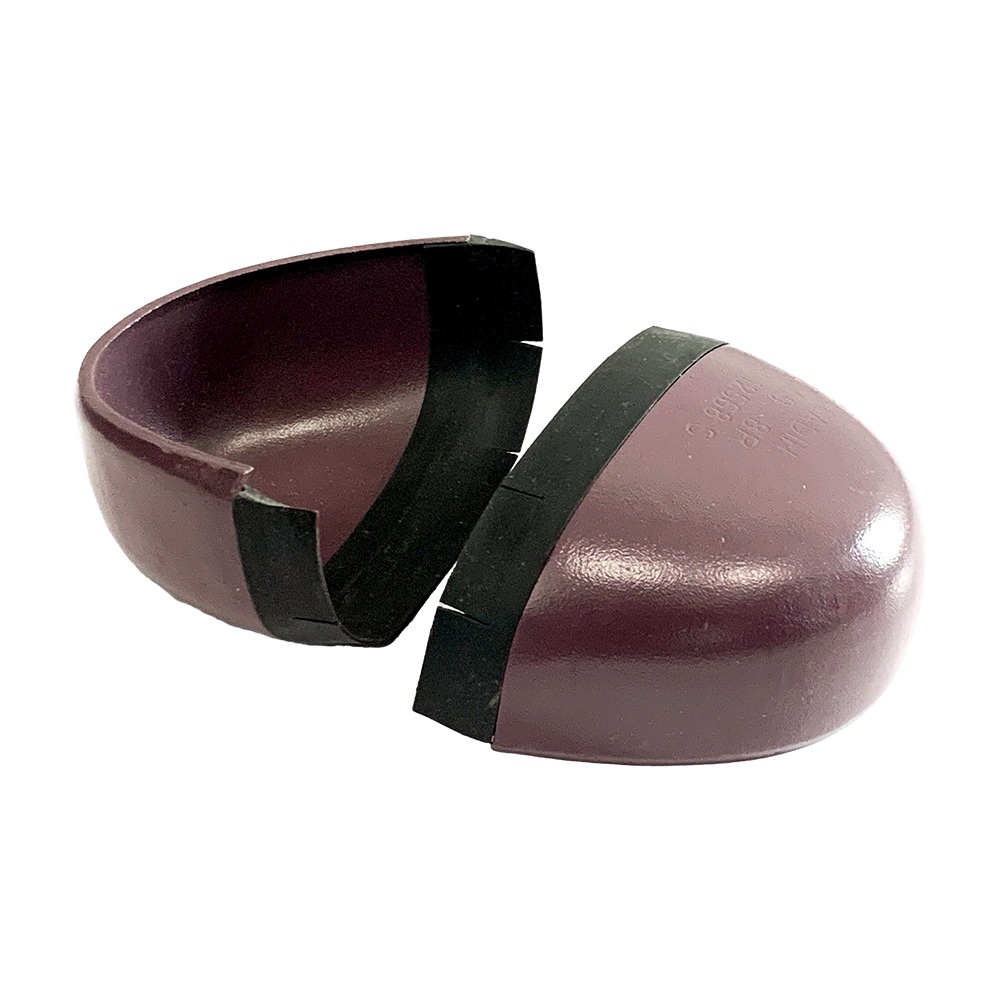
Material composition dictates how each option achieves this identical protection. A traditional Steel Toe Cap is forged from a thin layer of hardened steel. Sometimes manufacturers reinforce it with carbon. Mechanically, it acts like a half-hollow cylinder. It relies on sheer metallic density to deflect catastrophic force.
In contrast, engineers design composite toe caps from non-metals like Kevlar, fiberglass, or carbon fiber. This brings us to the "bulky" trade-off. To meet the exact same 3.5-ton crush rating as thin steel, standard composite materials must utilize thicker walls. This extra material volume often results in a more bulbous, wider toe box exterior.
Recently, the industry introduced advanced alternatives. Nano-composite and carbon fiber options utilize microscopic structural engineering, such as carbon nanotubes. These premium materials achieve steel-like thinness alongside composite-like weight. They represent the premium tier of modern safety footwear.
Heavy industry relies heavily on traditional materials. They deliver a historically proven, cost-effective performance profile. They offer the highest threshold for absolute catastrophic crush protection before structural failure occurs. If a piece of machinery rolls over your foot, this hardened metal barrier provides immense peace of mind.
Understanding the implementation realities reveals why they remain so popular. Let us review the specific advantages you gain on the job site.
Cost-efficient procurement: These boots remain incredibly economical for bulk B2B purchasing. Manufacturing stamped metal is cheaper than weaving high-tech carbon fiber.
Slimmer exterior profile: Because metal holds immense structural integrity at thin gauges, manufacturers can design a much sleeker boot. You avoid the "clown shoe" look associated with cheaper plastics.
Puncture resistance: A Steel Toe Cap provides unmatched protection against sharp hazards striking the front of the foot.
However, we must also examine the operational risks. The cons can severely impact daily comfort and usability depending on your environment.
High thermal conductivity: Metal transfers extreme temperatures rapidly. It pulls freezing cold or blistering heat directly into your foot.
Security friction: They consistently trigger metal detectors. This creates daily friction in secure facilities like airports or government buildings.
Excess dead weight: Heavy metal adds significant dead weight to your stride. Workers often compare this to wearing ankle weights over a grueling 12-hour shift.
Engineers developed composite materials to solve the ergonomic flaws of heavy industrial boots. Their performance profile is specifically designed to reduce kinetic chain fatigue during long shifts. Simultaneously, they provide total electrical and thermal insulation.
The implementation realities strongly favor workers who log high mileage on hard surfaces. The pros focus heavily on long-term bodily health.
Significantly lighter build: By removing heavy metals, these boots reduce lower-back and leg fatigue for roles demanding constant walking.
100% metal-free construction: They pass through security checkpoints silently. You save time and hassle during shift changes.
Thermal insulators: Non-metallic materials do not conduct heat or cold. This makes them absolutely essential for cold storage facilities or winter outdoor work.
Despite these incredible ergonomic benefits, you must consider the operational risks before making a purchase. The cons revolve around durability and replacement habits.
Single-Use Impact Failure: Metal may simply dent under stress and still offer marginal coverage. Composite absorbs kinetic energy by cracking. It completely shatters internally to save your foot. Therefore, it is strictly compromised after one significant impact and must be replaced immediately.
Higher initial cost: The complex engineering required to mold Kevlar or fiberglass results in a higher procurement cost per unit.
Misinformation runs rampant on industrial job sites. We hear the same rumors repeatedly. Let us debunk the three biggest safety footwear myths using biomechanics and standardized facts.
The Reality: This is a persistent urban legend. Biomechanical testing proves extreme force flat-crushes the steel cylinder rather than curling it backward. If an object is heavy enough to collapse a rated metal toe box, it would pulverize your foot regardless of the footwear. The solid cap prevents catastrophic amputations; it does not cause them. It absorbs the crushing blow so your bones do not.
The Reality: The protective material does not cause bone damage. Poor sizing causes bone damage. A safety toe box cannot be "broken in" or stretched like leather. If it rubs your toes on day one, it will rub them on day one hundred. You must buy boots wide enough to accommodate your natural foot spread.
The Reality: OSHA and similar global regulatory bodies mandate certified foot protection (PPE). They do not mandate specific materials. As long as your composite boot carries the correct ANSI/ASTM rating for the workplace hazard, it is fully compliant. Safety officers look for the certification stamp, not the metal content.
You now understand the science. How do you make the final choice? We structured a decision framework to simplify your procurement process.
Boot Material | Ideal Job Roles | Core Decision Logic |
|---|---|---|
Composite | Electricians, airport personnel, cold-storage warehouse workers, delivery drivers, structural engineers. | Prioritizes thermal insulation, electrical resistance, and long-term fatigue reduction. |
Steel | Heavy manufacturing, construction workers, logging professionals, heavy machinery operators. | Prioritizes maximum durability-to-cost ratios in extreme crush-hazard environments. |
When you shortlist composite materials, apply the logic of the "Boots Theory". You are investing in high-quality comfort for long-term health ROI. Reducing daily fatigue protects your joints over a decades-long career.
When you shortlist a Steel Toe Cap, you optimize for extreme durability. Environments with heavy, overhead crush hazards demand the ultimate structural integrity. Furthermore, bulk-purchasing budgets often require the maximum durability-to-cost ratio found in traditional materials.
Your final evaluation action-step requires you to always evaluate the whole boot. Follow these numbered steps to ensure optimal selection:
Check the outsole weight. A massive, heavy rubber outsole on a non-metal boot may still weigh more than a streamlined traditional boot.
Assess the upper materials. Thick leather adds significant weight compared to synthetic mesh.
Verify the shank material. If you need to pass metal detectors, ensure the boot uses a fiberglass or nylon shank instead of metal.
The choice between steel and composite is not a debate over which is safer. Both materials pass the exact same rigorous safety tests. The real decision centers on which material is more appropriate for your specific hazard environment and daily step count.
We highly recommend auditing your daily work environment first. If you face extreme cold or walk ten miles a day, lightweight insulators win. If you work under heavy cranes or operate heavy machinery on a tight budget, traditional metals remain king.
Take direct action when testing your shortlisted boots. Test them at the end of a shift when your feet are naturally swollen. Always wear your standard thick work socks during the fitting. This ensures the rigid, unyielding toe box perfectly accommodates your maximum foot volume without pinching.
A: Yes, provided they carry the exact same safety rating. Both materials must pass standardized tests requiring 200-Joule impact resistance and high static compression. They achieve this identical safety benchmark through different engineering methods and wall thicknesses.
A: Yes. Metal is a rapid thermal conductor. It quickly pulls the surrounding freezing temperatures into the boot chamber. For cold storage or freezing outdoor environments, non-metallic insulation is strictly recommended.
A: Yes, provided the rest of the boot is also manufactured from non-metallic materials. You must ensure the shank, eyelets, and zippers are plastic or fiberglass. Look specifically for "100% metal-free" designations on the box.
A: Standard non-metallic materials require thicker walls to withstand the 3.5-ton crush testing that a thin piece of hardened metal can handle easily. If you want a slimmer profile, look into advanced Nano-Composite technology.