Views: 0 Author: Site Editor Publish Time: 2026-07-25 Origin: Site
Workers often face a confusing choice when selecting safety footwear. The term "composite" serves as a broad umbrella for non-metallic safety toes. However, "fiber" refers specifically to advanced materials within this category. Selecting the wrong non-metallic toe cap carries real risks. It can increase worker fatigue, cause failed safety audits, or create severe discomfort in extreme environments. Navigating high-security zones or freezing facilities requires precise gear. You need to know exactly what protects your feet. This guide establishes an evidence-based framework for evaluating standard composite materials against advanced fiberglass and carbon options. We will break down how these materials compare. You will learn how to ensure compliance with ASTM F2413 and EN ISO 20345 standards. By the end, you will understand how specific safety toe constructions impact daily comfort, long-term durability, and overall workplace safety.
Understanding the basic chemistry behind your footwear is crucial. Manufacturers use distinctly different processes to create standard composites compared to advanced fiber options. You must recognize these differences to make an informed purchasing decision.
Manufacturers typically engineer standard composite toes from a mix of robust plastics. They often inject basic polymers, nylon, or Kevlar blends into a mold. These materials harden into a solid protective dome. They provide excellent electrical hazard protection. They also effectively resist extreme weather conditions.
However, this construction method has a structural reality. To meet rigorous safety standards, standard plastics require thicker molding. Basic plastic needs pure volume to absorb heavy impacts. This results in a significantly bulkier boot profile. Workers frequently refer to this as the "clown shoe" effect. The extra thickness also reduces interior volume. This reduction can cause painful toe-rubbing for workers. You will notice this discomfort especially if you have wider feet.
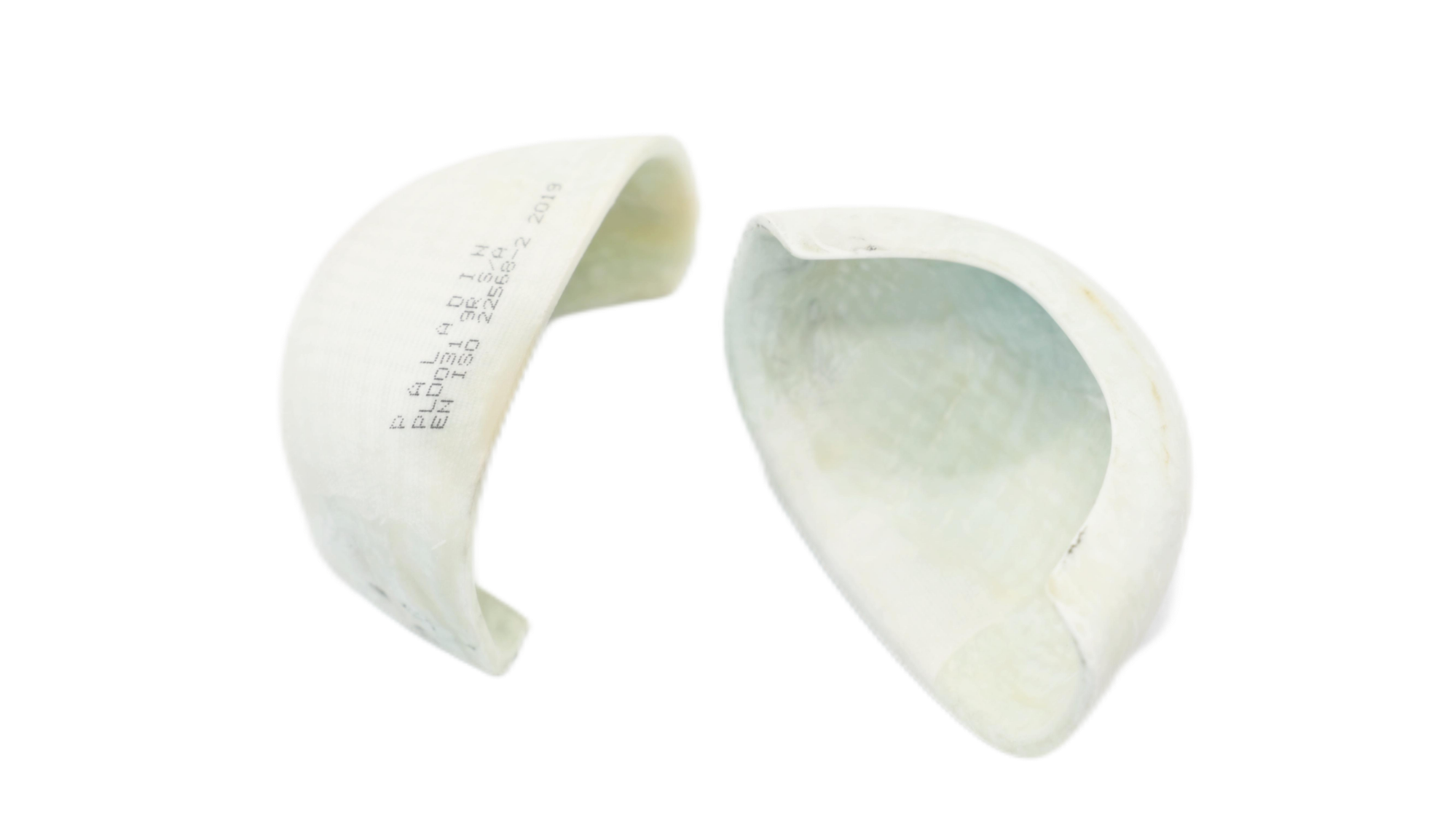
Fiber toes represent a major leap in footwear engineering. Manufacturers construct them from woven filaments tightly layered over one another. They then saturate these woven layers with specialized resin. The material cures under intense pressure and heat. This category primarily includes carbon fiber and fiberglass.
Fiberglass Toe Caps specifically provide a unique balance of benefits. They are completely non-conductive. They remain highly resistant to cracking under repeated daily stress. More importantly, they maintain a significantly thinner profile than basic plastic composites. The woven filament structure inherently absorbs and disperses kinetic energy better than solid plastic. Therefore, you get maximum protection using much less material.
Comparing safety materials requires looking beyond the spec sheet. We must analyze how structural features translate into real-world outcomes. You can evaluate these options across four critical performance metrics.
The following comparison table breaks down how these materials behave under pressure. You can use this data to evaluate practical daily performance.
| Performance Feature | Standard Composite (Plastic) | Fiberglass / Carbon Fiber |
|---|---|---|
| Material Volume Required | High (Thick walls) | Low (Thin walls) |
| Weight per Boot | Moderate to Heavy | Ultra-light |
| Energy Dispersal Method | Solid mass absorption | Woven filament distribution |
| Toe Box Spaciousness | Cramped to Moderate | Spacious / Ergonomic |
| Resistance to Cold Brittleness | Good (varies by plastic quality) | Excellent |
Once you decide to upgrade from standard plastics to woven fibers, a new choice emerges. You must choose between carbon fiber and fiberglass. Both materials offer exceptional safety ratings. Both provide a lightweight experience. However, they differ in manufacturing complexity, flexibility, and cost.
Carbon fiber represents the premium tier of safety footwear engineering. Manufacturers weave microscopic carbon atoms into distinct crystalline alignments. This structure creates an incredibly rigid material.
Fiberglass provides a highly pragmatic alternative. Engineers weave glass filaments into flexible mats before applying resin. This process offers unique advantages for footwear production.
Selecting protective equipment involves looking at the specific job-site environment. Theoretical advantages must hold up to real-world security protocols. They must also account for accidental impacts and budget constraints.
We must validate the use case for specialized secure environments. TSA agents, nuclear plant workers, and tech theatre crews face unique challenges. They must pass through security gates constantly. Standard composite and fiber toes shine in these scenarios. Both options pass through metal detectors smoothly. They save crews significant time during daily security screenings. You avoid the frustrating routine of removing heavy work boots at checkpoints.
We must strictly warn against re-using boots after a major crush event. Steel toes dent, providing a clear visual indicator of damage. Non-metallic toes do not dent. They often rebound to their original shape after an impact. Because of this, structural damage to fiberglass or plastic composites remains hidden. The internal resin matrix can suffer microscopic fractures beneath the leather exterior.
You cannot trust a compromised structure to protect you a second time. The micro-cracks severely reduce the material's impact rating. Therefore, boots must be replaced after a significant drop event. You must enforce this rule regardless of visible external damage. Ignoring this reality puts worker safety at extreme risk.
Procurement teams often debate the financial merits of these materials. We must acknowledge that outfitting a crew in fiberglass or carbon fiber boots requires a higher initial procurement budget. Standard composite boots cost less upfront.
However, you should argue the return on investment through improved daily compliance. Heavy boots cause foot pain. Foot pain leads to reduced productivity and musculoskeletal complaints. When workers experience ergonomic comfort, they complain less. They remain more active on their feet. Investing in lightweight fiber toes pays dividends by reducing physical strain and improving overall workplace morale.
Decision paralysis often strikes when browsing footwear catalogs. You can simplify the choice by mapping materials directly to worker tasks. Use the following logic to determine the best fit for your specific operational needs.
Selecting the right protective toe material directly influences worker health and safety. While standard composites serve as a functional, entry-level non-metallic option, they carry limitations. Their bulky nature and heavier weight can cause significant fatigue over long shifts. The advanced engineering behind Fiberglass Toe Caps and carbon fiber easily justifies the upgrade. Serious professionals prioritizing mobility, ergonomic comfort, and precise fit should choose fiber toes.
We encourage buyers to take action today. First, audit your current workplace safety mandates to confirm exact ASTM or OSHA requirements. Next, request a sample of fiber-toe boots for your team. Have workers test the internal space and weight differences on the job floor. Validate the ergonomic benefits firsthand before executing a bulk purchase. Equipping your workforce with premium footwear ultimately protects your most valuable asset.
A: OSHA does not approve specific materials. Instead, OSHA enforces strict workplace safety standards. They require footwear to meet ASTM F2413 impact and compression ratings. Yes, reputable fiberglass boots meet or exceed these critical ASTM standards. They provide full compliance for hazardous environments.
A: No, this is a common myth. Quality fiberglass and carbon resins maintain their impact ratings perfectly well below freezing. Unlike certain cheap plastics which can become brittle and shatter prematurely, engineered fibers retain their structural integrity in sub-zero conditions.
A: No. Pure fiberglass toes are 100% non-metallic. They will not trigger standard security metal detectors. However, you must ensure the rest of the boot does not contain hidden metal. Check for steel shanks or metallic eyelets before assuming the entire boot is scanner-friendly.