Views: 0 Author: Site Editor Publish Time: 2026-06-02 Origin: Site
Industrial workplaces face constant risks of crush injuries and unpredictable impact hazards. Every day, falling machinery or miscalculated loads threaten exposed workers.
For safety managers and procurement teams, selecting the right Personal Protective Equipment (PPE) goes beyond basic physical protection. It demands strict regulatory compliance and proactive measures to mitigate legal liability. You also need proven strategies to ensure widespread workforce adoption.
This guide shifts your focus from generic safety awareness to a definitive evaluation framework. We break down vital engineering benchmarks, expose material limitations, and highlight specific procurement red flags. You will discover exactly how to specify appropriate protective footwear for your demanding operational environment.
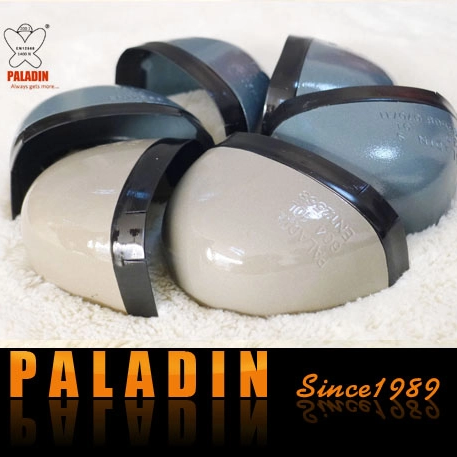
Uncompromised Baseline: Genuine steel toe caps are engineered to withstand up to 200 Joules of impact and 15kN of compression, outperforming most alternatives in sheer crush resistance.
Strict Compliance Matrix: Validating footwear against OSHA (ASTM F2413) or EN ISO 20345 standards is mandatory; non-compliant "protective" toes invite severe workplace liability.
Procurement Red Flags: Not all steel caps are equal. Substandard thicknesses (under 1.5mm) often fail international safety audits.
Scenario Alignment: While steel offers maximum structural integrity, specific environments (e.g., high-voltage areas or extreme cold) necessitate pivoting to composite alternatives based on objective risk assessments.
Understanding foot protection requires analyzing strict physics. Safety experts rely on universal engineering thresholds to measure reliability. A legally compliant Steel Toe Cap must endure a 200-Joule impact. We can visualize this energy easily. It equals a 20-kilogram solid weight dropped directly from a one-meter height. The material must also resist 15 kilonewtons of resting compression. This metric translates to roughly 1,500 kilograms of static crushing force.
You must consider structural integrity over time. Certain plastics and inferior thermopolymers often fail under duress. They develop invisible micro-fractures after minor impacts. Tempered steel behaves differently. It maintains highly predictable deformation curves. The steel absorbs extreme kinetic energy by bending slightly rather than shattering. This characteristic ensures the toe box will never collapse entirely under sustained crushing weight.
Volume-to-strength ratio presents another massive architectural advantage. Steel achieves maximum crush resistance using a remarkably thin physical profile. Composite materials require significantly thicker walls to pass identical compression tests. The thinner steel profile allows manufacturers to design a less bulky shoe exterior. Workers enjoy a streamlined boot silhouette. They retain ample internal cavity space for foot movement and comfort.
Common mistakes in PPE selection often ignore this ratio. Buyers sometimes choose cheap composite boots expecting lightweight comfort. They soon discover the thick plastic walls cramp the toes. Steel avoids this cramped feeling entirely. It delivers superior structural strength while prioritizing internal ergonomic space.
Compliance is a critical business function. Failing to provision standard-compliant PPE exposes your company to massive risks. Non-compliance directly results in heavy OSHA fines. It also leads to elevated worker compensation claims following preventable accidents. You must navigate a complex matrix of international standards.
North American specifications remain highly rigorous. OSHA 1910.136 outlines the exact legal environments demanding protective footwear. It legally mandates compliance with ASTM F2413 standards. This standard dictates strict impact and compression testing protocols. Meanwhile, the Canadian market follows CSA Z195-14. This framework uses a distinct visual identifier system. You will often see a Green Triangle patch on the boot. This triangle indicates Grade 1 toe protection combined with sole puncture resistance.
European and international markets rely on the EN ISO 20345 standard. This universal framework groups safety footwear into distinct protection tiers. Procurement officers must understand these exact categories before buying bulk inventory.
EN ISO 20345 Safety Footwear Tiers | ||
Tier Code | Protection Level | Key Features & Requirements |
|---|---|---|
SB | Baseline Safety | Basic 200-Joule toe protection. No other mandatory features. |
S1 | Enhanced Safety | SB features plus anti-static properties and heel energy absorption. |
S2 | Water Resistant | S1 features plus resistance to external water penetration and absorption. |
S3 | Maximum Hazard | S2 features plus puncture-resistant mid-soles and cleated outsoles. |
You must base final evaluations on documented proof. Procurement teams must demand valid certification documentation from suppliers. Never accept basic vendor assurances. Always ask for independent laboratory test reports before finalizing bulk footwear orders.
Global supply chain realities dictate immense caution. Manufacturers frequently attempt to cut production costs on internal components. They often use substandard metals for the hidden toe cap. This deceptive practice leads directly to severe compliance failures after final shoe assembly.
Industry experts rely on strict thickness benchmarks to ensure compliance. A high-quality cap measures between 1.7mm and 2.0mm in thickness. A 1.7mm profile easily passes most strict EU standards. However, specific boot lasts possess smaller internal cavities. These narrow designs often require a full 2.0mm thickness to pass rigid US ASTM standards. You must audit your supplier specs against these numbers.
Buyers frequently fall into the dangerous 1.2mm trap. Low-tier overseas manufacturers often stamp caps from recycled oil drums. These dangerously thin caps measure between 1.0mm and 1.5mm. They will permanently deform under light compression. They cannot pass formal certification. Legal definitions classify them merely as "protective" rather than true "safety" footwear. Equipping your workforce with these invites devastating liability.
You must also evaluate component shape and sole integration. Manufacturers design caps in two distinct styles:
Anchor Strip Integration: Heavy-duty work boots utilize a cap featuring a bottom anchor strip. This metal lip extends under the footbed. It locks securely into the heavy rubber sole. It prevents sole detachment during extreme flexing.
Strip-less Design: Lightweight athletic safety shoes use strip-less caps. These save a few grams of weight. They provide a streamlined aesthetic. However, they lack long-term durability in punishing environments like logging or heavy construction.
Procurement teams must match the cap design to the job site. Specifying a strip-less sneaker for a harsh oil rig guarantees rapid product failure.
We must evaluate alternative materials objectively. Steel is not universally flawless for every single scenario. You need a balanced, evidence-oriented assessment to make informed purchasing decisions.
Aluminum offers a popular alternative. It weighs significantly less than traditional steel. However, aluminum is softer. Manufacturers must use a thicker physical profile to achieve the mandatory 200-Joule compression rating. This added thickness reduces internal toe room. Furthermore, aluminum remains highly conductive to both electricity and extreme temperatures.
Composite materials utilize carbon fiber, Kevlar, or high-density plastic. They are entirely non-conductive. They remain thermally inert. Composite boots excel in electrical hazard (EH) environments. They also keep feet warmer during extreme sub-zero weather. However, composite lacks post-impact structural retention. A crushed composite cap often shatters or cracks. It does not rebound or hold its shape like metal.
We can summarize the material comparison using a simple feature matrix chart:
Material Comparison Chart | |||
Feature | Steel | Aluminum | Composite |
|---|---|---|---|
Crush Resistance | Exceptional | Good | Moderate (shatters) |
Weight Profile | Heaviest | Light | Lightest |
Conductivity | High | High | None (Inert) |
Profile Thickness | Thinnest | Thick | Thickest |
Use clear shortlisting logic for your workforce:
Choose Steel for: Heavy construction operations, massive logistics hubs, metalworking shops, and distinct high-crush-risk zones.
Pivot from Steel for: Aviation security roles requiring metal detector clearance, high-voltage electrical work, or continuous sub-zero outdoor exposure.
Providing compliant footwear represents only half the battle. You must manage serious workforce adoption risks. Workers frequently discard or refuse to wear safety shoes. The primary culprit is almost always improper fit. Rigid metal can cause severe chafing, blister formation, or painful "toe bite" when walking.
Successful implementation requires excellent design integration. A quality Steel Toe Cap must pair flawlessly with adequate internal cushioning. Manufacturers must include an anti-friction fabric lining. They must also utilize the correct shoe last during manufacturing. A proper mold prevents the hard steel edge from digging aggressively into the metatarsal area during natural foot flexion. Comfort drives safety compliance on the floor.
Safety managers need strict inspection and replacement protocols. You cannot treat safety boots as permanent assets. Define clear visual and physical inspection criteria for your team.
Inspect the outer leather covering the toe box monthly.
Check for visible metal exposure or deep structural gouges.
Feel the interior lining for signs of metal edge protrusion.
We operate under one transparent assumption: physical impacts permanently alter structural integrity. Once a boot sustains a major impact or exhibits visible denting, it is fully compromised. You must retire the boot immediately. Do not hesitate. You must replace it even if the exterior leather appears relatively intact. Reusing compromised gear guarantees failure during the next accident.
The steel toe cap remains the most reliable and historically proven method for mitigating foot crush injuries. Its unparalleled volume-to-strength ratio and predictable deformation physics set an industry benchmark that modern plastics struggle to replicate. By understanding core engineering standards, you can avoid dangerous procurement traps hidden deep within global supply chains.
Take immediate, action-oriented next steps to protect your workforce. First, audit your current workplace hazard profiles against mandatory OSHA or ISO requirements. Next, rigorously verify all supplier documentation to ensure you receive caps with a minimum 1.7mm thickness. Finally, select footwear designs that pair robust metal protection with comfortable, ergonomic lasts. Prioritizing correct fit guarantees long-term worker compliance and ultimately saves lives on the floor.
A: While steel is denser, the total weight difference in a modern work boot is often only 30–50 grams per shoe. Weight is usually dictated more by the outsole and upper materials than the toe cap itself.
A: Steel conducts electricity, but if the shoe's exterior and outsole are specifically rated for Electrical Hazard (EH) protection, the steel cap is isolated from the ground. However, strict electrical environments often prefer composite caps to eliminate all accidental grounding risks.
A: Look for the internal tag on the tongue of the shoe. It must explicitly state compliance with ASTM F2413 (US), EN ISO 20345 (EU), or an equivalent regional standard. Shoes lacking these specific codes have not been formally verified.