Views: 0 Author: Site Editor Publish Time: 2026-06-15 Origin: Site
Workplace foot injuries generate staggering operational costs every single year. Non-fatal manufacturing injuries currently cost millions of lost workdays annually across the globe. Even minor foot strains quickly escalate into chronic employee absences. Beyond acute trauma, the hidden drain of daily foot fatigue quietly sabotages team productivity. Moving past generic safety advice requires a critical evaluation of specialized gear. You must assess heavy-duty protective footwear based on the exact environments your teams face daily. This means scrutinizing component specifications rather than settling for basic compliance checkboxes. We provide procurement managers, safety officers, and contractors an evidence-based framework right here. You will learn to match a Steel Toe Cap with specific construction and manufacturing hazards. This targeted approach ensures robust legal compliance, reduces injury rates, and ultimately improves long-term worker retention.
Compliance Baseline: A true safety toe must meet verified thresholds, typically 200 Joules of impact (EN ISO 20345) or a 75-pound drop test (ASTM F2413).
Environment Dictates Design: Construction sites require dynamic hazard protection (puncture, weather), while manufacturing floors demand extreme compression resistance and fatigue management for static standing.
The Material Trade-off: While composite materials offer thermal insulation, traditional steel remains the undisputed standard for maximum crush protection and lower unit costs at scale.
The Comfort Factor: Over-indexing on protection while ignoring the midsole (e.g., EVA) and outsole construction leads to low worker compliance and increased fatigue after 6-hour shifts.
Safety managers cannot rely on vague marketing promises. Legal compliance requires hard numbers. You must understand the precise technical thresholds defining true foot protection. A certified Steel Toe Cap provides measurable defense against catastrophic crush injuries.
First, we need to unpack the "200J" metric. European standards (EN ISO) use Joules to measure impact resistance. An impact of 200 Joules roughly equals dropping a 20-kilogram weight from a height of one meter. This force simulates a heavy tool or building material striking the foot. Alongside impact, we measure static compression. Standards require safety toes to withstand 15kN of pressure. This equates to supporting roughly 1.5 metric tons. It gives workers precious seconds to extract their foot if a vehicle rolls over it.
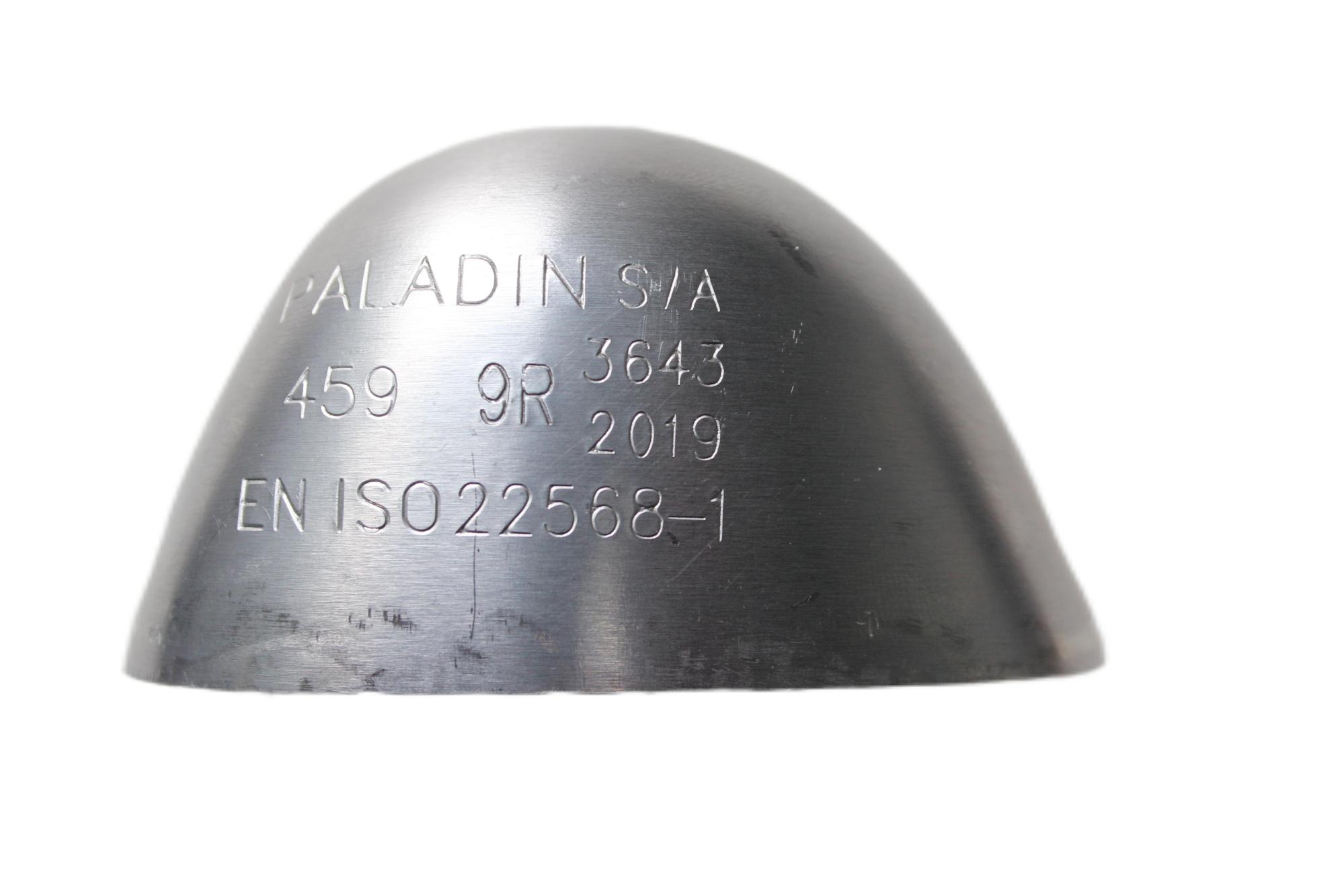
You must clearly distinguish between component standards and complete footwear standards. EN ISO 22568-1 tests the raw metal toe cap itself. However, EN ISO 20345 certifies the complete assembled shoe. Buying an approved cap does not automatically guarantee the finished boot is safe.
North American facilities follow ASTM F2413 parameters. They use imperial measurements for testing. You will frequently see tags reading "I/75" and "C/75". The "I/75" indicates the boot withstands a 75-pound object dropped from 18 inches. The "C/75" confirms it resists 2,500 pounds of static compression. Understanding these tags helps you verify compliance during floor inspections.
Always request full EN ISO 20345 or ASTM F2413 certificates from suppliers.
Never accept component-only (EN ISO 22568-1) reports as proof of whole-boot safety.
Audit boot tags quarterly to ensure workers wear approved gear.
Construction sites present unpredictable environments. Workers navigate mud, exposed nails, and uneven ground daily. Heavy rolling equipment and structural steel drops pose constant threats. A standard factory shoe fails quickly here. You need a rugged Steel Toe Cap paired with specialized site-specific features.
Puncture resistance remains non-negotiable for framing and demolition work. Stepping on exposed nails causes severe, infection-prone injuries. Manufacturers pair protective caps with either steel or Kevlar midsoles. Kevlar offers a superior strength-to-weight ratio. It flexes easily, improving mobility on scaffolding. Steel plates cost less but add significant weight and rigidity to the boot.
Boot construction methods drastically impact longevity. Goodyear Welt construction dominates the heavy construction sector. Manufacturers stitch the upper, lining, and welt together before attaching the sole. This makes the boot highly durable and resolable. Workers can replace worn outsoles without buying new boots. However, you must account for a longer break-in period. These rigid boots feel stiff during the first few weeks.
Heavy civil engineering projects demand additional add-ons. Metatarsal guards become necessary when handling large pipes or structural steel. The toe cap only protects the ends of the toes. A metatarsal guard extends over the top of the foot. It shields the fragile upper foot bones from crushing impacts. You must mandate these guards for high-risk rigging and pipeline crews.
Factory floors differ vastly from outdoor construction sites. The hazards remain highly controlled but involve massive tonnage. Specialized trades face cumulative fatigue from static standing. Your footwear strategy must pivot from all-terrain ruggedness to targeted industrial defense.
Warehouse and logistics environments harbor constant vehicular threats. Forklift rollovers and pallet drops happen frequently in fast-paced loading docks. You need maximum static crush resistance here. The rigid nature of a Steel Toe Cap excels under immense localized pressure. It prevents heavy forklift tires from flattening the toe box.
Welding and machining roles introduce extreme thermal hazards. Heat resistance becomes critical. Workers face 500°F slag and hot metal splatter constantly. Standard synthetic boots melt easily under these conditions. You must pair a steel front with specialized nitrile rubber outsoles. These outsoles resist melting. Additionally, Kevlar stitching prevents seams from burning apart when exposed to sparks.
You cannot ignore the concrete floor reality. Factory workers stand on unyielding concrete for 10 to 12 hours a shift. Their direct feedback often highlights severe heel and lower back pain. You must offset the heavy rigid front with supportive engineering. Direct-attach injection-molded outsoles offer excellent flexibility. Polyurethane (PU) or Ethylene-Vinyl Acetate (EVA) midsoles provide vital shock absorption. These materials compress slightly underfoot, absorbing the micro-impacts of walking on concrete. Proper cushioning prevents fatigue from escalating into safety incidents.
Procurement teams constantly debate toe materials. They must balance unit costs, safety margins, and worker comfort. We present a balanced, non-biased comparison to help you shortlist the right material. Your choice depends entirely on operational constraints.
You should choose steel for high-risk crush zones. Heavy manufacturing facilities benefit from its absolute structural integrity. Budget-conscious bulk procurement programs also favor metal caps due to lower manufacturing costs. Furthermore, metal offers the slimmest toe box profile. It provides the same protection level as composite but requires less material thickness. This creates a less bulky shoe.
Composite materials utilize tough resins or fiberglass. You should specify composite caps for environments with extreme temperature fluctuations. Metal conducts cold and heat aggressively. Composite insulates the foot in freezing conditions. High-security zones require them as well. Airports and nuclear facilities use metal detectors. Composite caps allow workers to pass through security seamlessly. Finally, composite weighs about 30% less. Roles requiring massive daily step counts benefit greatly from this weight reduction.
We must dispel the most pervasive safety myth. Some workers believe a heavy impact will cause the steel to curl and amputate their toes. Factual testing data entirely disproves this. A force capable of collapsing a certified steel structure would utterly pulverize an unprotected foot. The metal cap acts as a sacrificial shield. It deforms under catastrophic loads but ultimately saves the foot from complete destruction.
Feature | Steel Cap | Composite Cap |
|---|---|---|
Crush Resistance | Maximum protection; handles extreme static loads. | High protection; rebounds slightly after impact. |
Weight | Heavier; increases fatigue over long walking distances. | 30% Lighter; excellent for high step-count roles. |
Thermal Conductivity | High; gets cold in winter and hot near furnaces. | Low; insulates well against weather extremes. |
Profile Thickness | Slim; allows for a traditional shoe appearance. | Bulky; requires thicker walls to meet safety standards. |
Focusing solely on the front impact zone ignores the worker's holistic experience. A protective cap means nothing if workers refuse to wear the boot. You must address real-world implementation risks proactively.
Safety forums constantly discuss the "6-Hour Ache". Cheap safety boots fail to provide support mid-shift. The arch support collapses, and the insole flattens out. Workers alter their gait to compensate for the pain. This unnatural walking pattern causes knee and lower back issues. You must evaluate the entire boot structure. Supportive shanks and contoured footbeds prevent this mid-shift breakdown.
Outsole selection matters immensely. You must match the tread pattern to the floor surface. Smooth factory concrete requires shallow treads. Shallow treads maximize surface contact for slip resistance. They also prevent workers from tripping and do not track debris inside. Conversely, muddy construction sites demand deep Vibram-style lugs. These aggressive treads bite into loose soil and self-clean mud as the worker walks.
Internal moisture management prevents painful friction. A heavy Steel Toe Cap traps body heat inside the shoe. Sweaty feet soften the skin, leading to severe blisters. You should actively recommend proper sock pairings. Synthetic blends or Merino wool wicking socks move moisture away from the skin. Avoid 100% cotton socks, as they trap sweat. Furthermore, prioritize breathable full-grain leather uppers over cheap split-leather coated in plastics. Breathable materials allow trapped vapor to escape efficiently.
Selecting PPE for a large workforce requires a methodical approach. Safety officers and B2B buyers must navigate complex supplier claims. Actionable evaluation methods prevent costly sourcing mistakes.
Validating certifications protects your liability. You must request and verify lab test reports directly from manufacturers. Do not trust glossy marketing brochures or website claims alone. Ask for the official ISO or ASTM testing documents. Check the dates on these reports. Ensure the testing facility holds proper international accreditation. Authentic suppliers gladly provide these documents upon request.
Piloting and sizing rollouts determine program success. You should never order a massive bulk shipment without testing first. Form a pilot group of 10 to 15 diverse workers. Order various sizes and widths for them to wear for one month. Gather their honest feedback regarding comfort and grip.
Sizing safety shoes requires distinct rules. The rigid metal box does not stretch. It will never break in over time. If the cap rubs a worker's toes on day one, it is the wrong size. You must mandate sizing up or seeking "wide" variants (like EE or EEE) during fitting sessions. Preventing toe-rubbing ensures workers do not secretly swap out their PPE for unapproved street shoes.
Ordering standard widths for the entire crew without checking foot shapes.
Assuming leather stretching will fix a tight toe box.
Failing to cross-reference the required slip-resistance ratings for your specific floor type.
We must recognize that a heavy-duty safety shoe serves as a specialized tool, not a blanket solution. Its ultimate effectiveness relies entirely on accurate hazard matching and ergonomic integration. You cannot simply hand out boots and expect injury rates to drop. You must consider the specific terrain, the exact temperature range, and the daily walking distance of your crew.
Take these actionable next steps to refine your PPE program:
Audit your current workplace foot injury data to identify specific hazard zones.
Review your internal compliance minimums against updated ISO and ASTM standards.
Establish a strict protocol for requesting actual lab test sheets from suppliers.
Implement a pilot testing group before finalizing your next major footwear sourcing cycle.
A: Yes, metal conducts temperature rapidly. Cold weather transfers straight through the cap to your toes. You can solve this by wearing thicker Merino wool insulation. Alternatively, switch to composite materials for extreme cold environments, as resin and fiberglass do not conduct cold.
A: No. A dent indicates compromised structural integrity. The metal absorbs the energy by deforming safely. Once a cap absorbs a massive impact, it cannot protect you from a second strike. You must retire and replace the boot immediately.
A: Standard safety toes focus on crush protection. EH boots protect against electrocution. You can safely use metal caps in EH boots because the metal stays fully encased in non-conductive materials like thick rubber and leather. The metal never touches the electrical source or your foot.
A: The leather upper and the insole generally break in over two to three weeks. However, the metal cap itself will never break in, stretch, or soften. If the rigid front rubs your toes on day one, you have the wrong size and need a wider fit.