Views: 0 Author: Site Editor Publish Time: 2026-06-27 Origin: Site
In 1869, John A. Roebling designed the iconic Brooklyn Bridge, but he never saw its completion. A docking boat crushed his foot, leading to a fatal tetanus infection. This historical tragedy sharply illustrates the severe reality of workplace hazards we still face today. For multinational safety managers and B2B procurement teams, providing footwear with a dependable Steel Toe Cap is not just about buying a rugged boot. It requires strict alignment with overlapping regional and international compliance frameworks. You must navigate a complex web of testing methodologies, physical environments, and legal mandates. Our objective in this article is to demystify global safety ratings. We will clarify the difference between regulatory enforcement and testing standards. You will also gain an actionable evaluation framework to streamline shortlisting and improve lifecycle management.
Universal Baseline: The foundational global metric for a protective steel toe cap is 200 joules of impact resistance, though regional testing methods differ.
Regulatory Distinctions: Government bodies (like OSHA) enforce safety rules, while independent organizations (like ASTM or ISO) dictate the testing and performance thresholds. "OSHA-approved boots" do not exist; boots are only ASTM-compliant.
Targeted Procurement: Not all safety boots need every protective feature. Procurement must match the specific label ratings (e.g., EH, PR, SR) directly to documented site hazard assessments to avoid overspending and ensure compliance.
Lifecycle Rules: A steel toe cap is compromised after a single significant impact. Damaged safety footwear must be immediately decommissioned, even if the exterior appears intact.
Multinational operations frequently face severe compliance fragmentation. Safety programs across different continents often require distinct certifications. You must align PPE purchases with the dominant safety standard of your operating region. Ignoring regional rules can expose your company to massive liability claims and regulatory fines. A unified understanding of global requirements is critical to ensure worker protection worldwide.
The United States relies heavily on ASTM standards. Procurement teams must differentiate between ASTM F2412 and ASTM F2413. ASTM F2412 outlines the precise testing methodology used in the laboratory. ASTM F2413 dictates the actual performance requirements the footwear must meet. The core baseline for any Steel Toe Cap under this standard includes strict Impact (I) and Compression (C) ratings. Footwear must survive specific drop weights and compression loads without crushing the toe area.
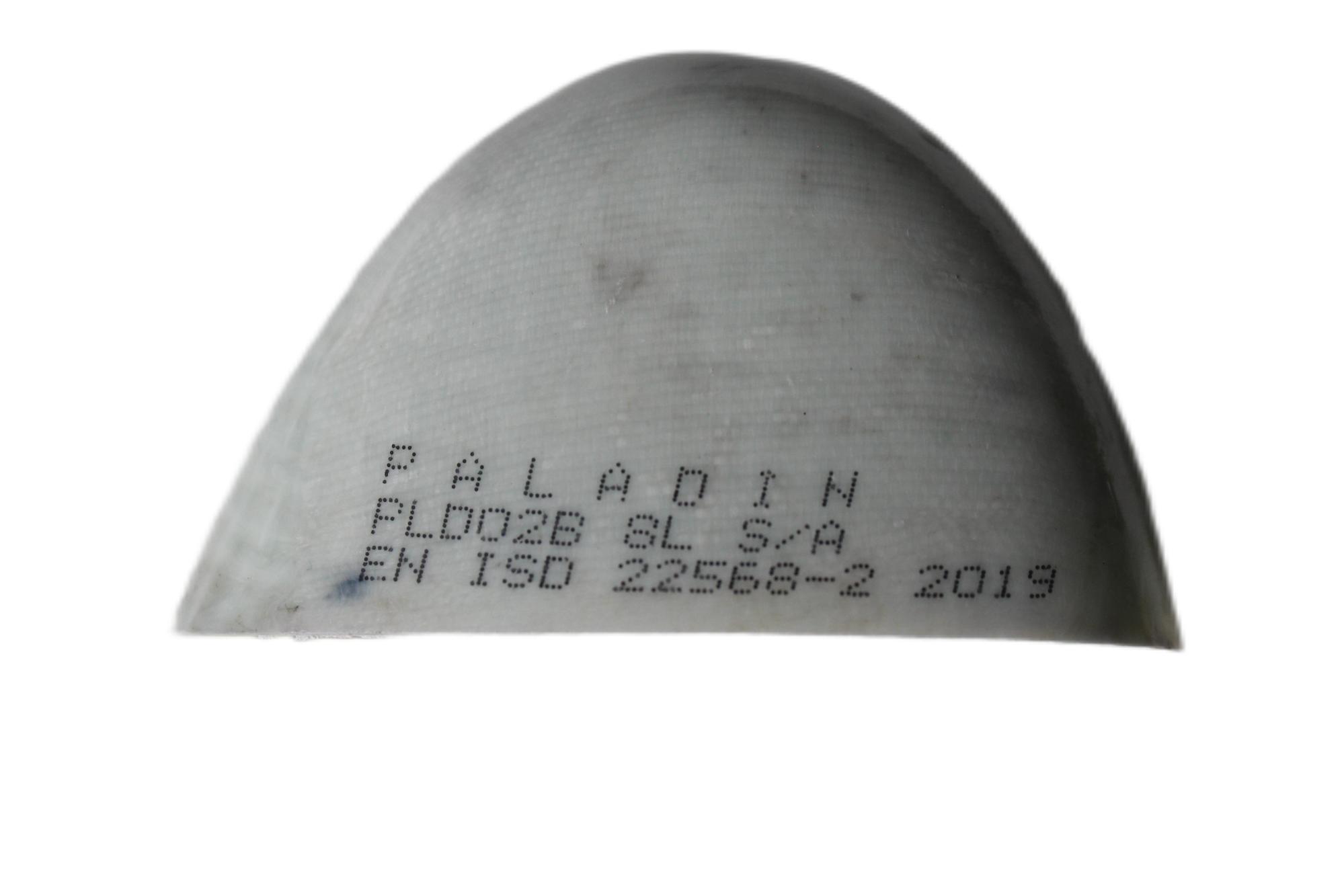
In Europe and many international markets, the EN ISO 20345 standard governs whole-shoe protective footwear. This comprehensive framework requires safety footwear to protect against impact and compression risks. However, manufacturers also rely on the specific EN ISO 22568 standard. This secondary standard governs the rigorous testing of individual protective components. Laboratories test the loose toe cap extensively before integrating it into the final boot structure.
Australia and New Zealand utilize the AS/NZS 2210.3 standard. This framework perfectly aligns with the global 200-joule impact threshold. A 200-joule drop equates to a 20-kilogram weight falling from roughly one meter. Additionally, the AS/NZS 2210.5 standard supplements these core rules. It introduces mandatory ergonomic evaluations and slip-resistant performance thresholds for diverse industrial environments.
Region | Primary Standard | Core Testing Focus | Global Impact Baseline |
|---|---|---|---|
United States | ASTM F2413 | Impact (I) and Compression (C) ratings | ~101.7 Joules (75 ft-lbs) specific to US |
Europe / International | EN ISO 20345 | Whole-shoe performance and structural integrity | 200 Joules |
Component Testing | EN ISO 22568 | Individual toe cap testing prior to assembly | 200 Joules |
Australia / New Zealand | AS/NZS 2210.3 | Occupational protective footwear core metrics | 200 Joules |
Procurement buyers frequently struggle with compliance clarity. You must understand who sets the rules versus who enforces them. Government agencies handle workplace enforcement. Independent standard organizations define laboratory testing parameters. Blurring these lines leads to poor purchasing decisions.
The "OSHA Approved" boot is a widespread industry misconception. Manufacturers cannot label footwear as OSHA approved because OSHA does not test products. OSHA strictly requires the use of protective footwear in hazardous environments. To define what makes footwear adequate, OSHA references external consensus standards. They rely on ASTM F2413 to set the legal baseline for compliance. You are buying ASTM-compliant boots to satisfy OSHA mandates.
Financial and legal responsibility remains a heavily debated topic. Employers often ask who pays for protective gear. OSHA issued a formal letter of interpretation in 2013 regarding PPE costs. This document clarified financial boundaries for safety managers. Employers must fund specialty protective footwear required for niche hazards. Examples include boots with specific metatarsal guards or electrical hazard ratings. Conversely, employees typically pay for non-specialty safety shoes. If the company allows workers to wear standard safety boots off-site, the employer generally avoids funding them.
You must also address the ANSI Z41 legacy in older procurement documents. The American National Standards Institute (ANSI) Z41 standard was the industry benchmark for decades. However, authorities officially superseded it in 2005. ASTM F2412 and F2413 completely replaced it. Some legacy procurement contracts and outdated safety manuals still erroneously reference ANSI Z41. You must update internal documents to reflect current ASTM requirements to maintain legal compliance.
A bare Steel Toe Cap is only the foundation of a safety boot. Decision-makers must look deeper to ensure full workplace protection. You should expertly read the physical label sewn onto the boot tongue. This label verifies critical secondary protections.
Reading the ASTM label requires a clear line-by-line breakdown. Modern labels follow a strict formatting code. Understanding this code prevents you from deploying the wrong footwear into dangerous zones.
Line 1: This displays the standard year. It indicates which version of the standard the boot meets. You will typically see ASTM F2413-18 or the newly updated ASTM F2413-24.
Line 2: This line specifies gender suitability alongside the core Impact and Compression ratings. It confirms the boot passed baseline crush testing.
Line 3 and beyond: These lines list additional protective designations. They highlight specialized features tailored to niche industrial environments.
Evaluating key designations ensures targeted hazard matching. You must differentiate Electrical Hazard (EH) properties from Static Dissipative (SD) properties. EH boots are highly non-conductive. They protect workers from accidental contact with live electrical circuits. SD boots perform the opposite function. They safely dissipate static electricity buildup through the sole into the ground. You need SD boots in volatile environments where a static spark could ignite fumes or damage sensitive electronics.
Puncture Resistance (PR) represents another vital designation. A PR label indicates the boot contains a protective plate in the midsole. This feature is absolutely crucial for construction sites and heavy industrial zones where stepping on nails is common. Furthermore, slip resistance has seen major recent changes. The 2024 updates formally integrated slip resistance thresholds into primary labeling. You will now see SR (Slip Resistance) or SRO (Slip Resistance Oily) marks. These incorporate the strict testing parameters defined under ASTM F3445-21.
Buying compliant footwear solves only half the problem. Managing its lifecycle is equally important to prevent critical workplace failures. A robust tracking system ensures boots perform exactly when workers need them most.
Safety managers must strictly enforce the "One and Done" impact rule. The physics of a Steel Toe Cap under extreme stress are unforgiving. A major impact forces the metal to absorb massive kinetic energy. This energy absorption frequently causes micro-fractures or structural denting. Even if the thick leather overlay completely hides the damage, the cap's integrity is ruined. You must mandate immediate replacement after any significant impact event. Keeping a compromised boot in service invites catastrophic injuries during the next drop.
Visual wear and tear indicators provide clear cues for retirement. Workers often ignore slow degradation. You must train teams to spot exposed steel protruding from deeply worn leather. Worn leather compromises structural stability. Additionally, you should inspect slip-resistant treads regularly. Bald treads drastically increase slip and fall risks on wet surfaces. Degraded waterproofing also signals the end of a boot's life. Water ingress causes internal rot and ruins electrical hazard protections.
Balancing the cost versus safety equation remains difficult. We acknowledge the tension between tight budget constraints and proactive replacement. However, arbitrary replacement rules waste money. We strongly advocate for scheduled visual audits. Regular inspections build a trustworthy safety culture. Audits allow you to replace damaged gear strategically rather than waiting for an accident to force your hand.
Transitioning technical knowledge into a B2B implementation program requires logical shortlisting. You need a structured approach to deploy protective footwear successfully. A phased rollout minimizes budget waste and maximizes worker compliance.
Conduct a Granular Hazard Assessment: Never purchase a blanket footwear solution for an entire facility. You must map specific work zones to exact ASTM or ISO label requirements. An electrical switch room requires EH-rated boots. A wet loading dock requires SRO slip-resistant treads. Match the boot directly to the localized threat.
Prioritize Fit and Field Testing: Poor fit directly causes compliance failures. If boots are uncomfortable, employees will secretly remove them or modify them. We recommend launching a focused field test phase. Select a small cohort of workers to test different models. Use this phase to validate comfort, anti-fatigue properties, and environmental suitability. For example, verify insulation weight for workers in cold storage before issuing a bulk purchase order.
Document and Audit: You must establish clear tracking mechanisms for PPE issuance. OSHA inspectors expect rigorous documentation. Maintain mandatory training records showing employees understand how to inspect their own boots. Proper documentation guarantees audit readiness and protects the company from negligence claims.
Selecting reliable protective footwear demands more than trusting vague marketing claims like "heavy duty" or "waterproof." Safety managers must demand explicit, verifiable labels that meet current ASTM or EN ISO standards. Protecting your workforce requires deep hazard analysis paired with proactive lifecycle management.
To optimize your next safety program rollout, consider taking these actionable steps:
Audit your current PPE procurement list against the latest 2024 compliance standard updates.
Eliminate any legacy references to outdated frameworks like ANSI Z41 from internal safety manuals.
Schedule a facility-wide footwear inspection to identify and decommission boots compromised by structural wear.
Consult with a specialized footwear compliance expert to perfectly match secondary boot ratings to your localized site hazards.
A: No, OSHA does not mandate, endorse, or approve any specific footwear brand. OSHA only requires that the protective footwear you provide meets or exceeds referenced consensus standards, such as ASTM F2413. As long as the boots carry the proper compliance label for the hazards present, the brand does not matter.
A: No, it is no longer valid. While historically referenced across many industries, the ANSI Z41 standard was officially superseded in 2005. Any new PPE procurement initiatives or internal safety documents should strictly adhere to current ASTM F2413 or EN ISO 20345 standards.
A: Yes, composite toe caps face the exact same testing frameworks. Both materials must pass identical impact and compression thresholds to earn the safety certification. A composite boot rated under ASTM F2413 offers the same baseline crush protection as a steel model.
A: Replacement frequency depends entirely on environmental usage and wear patterns. However, you must replace safety boots immediately after any heavy impact event. You should also replace them whenever structural integrity, leather uppers, or slip-resistant treads show visible signs of significant degradation.