Views: 0 Author: Site Editor Publish Time: 2026-09-23 Origin: Site
Procurement managers and HSE officers face a complex landscape when specifying PPE across multi-national sites. Differing regulatory environments make it difficult to standardize safety protocols globally. Misaligning footwear standards doesn't just risk OSHA violations—it jeopardizes worker safety and company liability.
While both ASTM F2413 (US) and EN ISO 20345 (Europe/Global) mandate rigorous testing for impact and compression, their core approaches diverge. Their classification systems, secondary hazard requirements, and testing methodologies differ significantly. Choosing the wrong standard can lead to severe compliance gaps and leave employees exposed to preventable injuries.
This guide provides a clear framework for evaluating both standards. You will learn how to specify the right footwear for specific site hazards and improve employee adoption. Ultimately, we help you ensure legal compliance and optimize your entire PPE procurement strategy.
Regional Compliance: ASTM F2413 is the legal baseline for OSHA compliance in the US, while ISO 20345 is the mandatory standard across Europe and widely adopted globally.
Core Protection: Both standards require a protective toe cap to withstand high impact, but ISO 20345 uses a tiered "S" rating system (S1, S2, S3), whereas ASTM categorizes protections individually (e.g., I/75, C/75).
Feature Evaluation: Purchasing decisions must map specific job site hazards (e.g., electrical risks, sharp debris) to standard-specific features like a puncture resistant insole or a metatarsal guard.
Procurement Strategy: Boots can be dual-certified. Mandating dual-certification streamlines procurement for multi-national workforces but may limit vendor selection.
Failing to map site hazards to the correct safety footwear standard leads to two costly extremes. First, under-specifying exposes your workforce to severe injuries. It also invites massive regulatory fines and expensive workers' compensation payouts. Second, over-specifying creates a different hazard altogether. Buying overly heavy, excessively armored footwear increases physical fatigue. Workers often refuse to wear uncomfortable boots. They might intentionally bypass PPE protocols, leaving your facility legally exposed.
Liability hinges on establishing a solid compliance baseline. In the United States, OSHA 29 CFR 1910.136 explicitly references ASTM standards. Utilizing ISO-only footwear in a US-regulated facility carries immense compliance risks. An inspector can cite your facility unless you provide a thoroughly documented equivalency audit. Such audits require engineering approvals and waste valuable administrative time. US-based buyers should insist on clear ASTM labeling.
A successful footwear procurement program balances protection, legality, and user experience. To achieve this, safety managers must measure success across three distinct pillars:
100% Regulatory Compliance: Footwear must display the exact certifications required by local law.
High Worker Adoption: Boots must offer reasonable comfort, flexibility, and acceptable weight to prevent fatigue.
Streamlined Vendor Management: Procurement teams should consolidate suppliers capable of meeting global standards simultaneously.
Understanding the structural differences between these standards prevents procurement errors. The most significant divergence lies in how each standard groups safety features. Buyers must understand whether they are purchasing a bundled package or selecting features individually.
ASTM F2413 operates entirely à la carte. A boot must meet baseline impact and compression requirements first. Beyond this baseline, manufacturers test and label additional features individually. If a worker needs electrical hazard protection, the boot must specifically display the "EH" designation. This modular approach allows buyers to pinpoint exact requirements.
Conversely, ISO 20345 uses a bundled classification system. It groups common safety requirements into tiered "S" ratings. For example, an "S3" rating automatically guarantees several features simultaneously. An S3 boot includes a protective toe cap, water resistance, a cleated outsole, and penetration resistance. Buyers simply specify the tier rather than listing individual test requirements.
Baseline impact testing also varies in execution. ISO 20345 utilizes a 200-Joule drop test. Technicians drop a heavy steel wedge onto the toe box to ensure adequate clearance remains. ASTM F2413 employs the Class 75 impact test. This involves dropping a 50-pound weight from an 18-inch height to generate 75 foot-pounds of force. Both tests simulate devastating workplace accidents, yet their metric frameworks differ entirely.
Table 1: Core Differences Between ASTM and ISO Safety Footwear Standards
Feature/Metric | ASTM F2413 (US) | ISO 20345 (Global/EU) |
|---|---|---|
System Structure | À la carte (Individual labels) | Bundled tiers (S1, S2, S3, etc.) |
Impact Test Energy | 75 foot-pounds (101.7 Joules) | 200 Joules |
Slip Resistance | F3445 (Separate standard) | Integrated (SRA, SRB, SRC, or SR) |
Puncture Mark | PR | P (or implied by S3/S1P) |
Protecting the toes from crushing injuries remains the cornerstone of both standards. Buyers frequently debate the merits of traditional steel toe caps versus modern composite or alloy alternatives. It is vital to remember standards dictate performance, not the material used. A composite toe must survive the exact same 75-foot-pound or 200-Joule impact test as a steel toe. Material selection should depend on site conditions. Metal detectors and extreme cold weather favor composite materials, while heavy industrial environments often favor the thinner profile of steel.
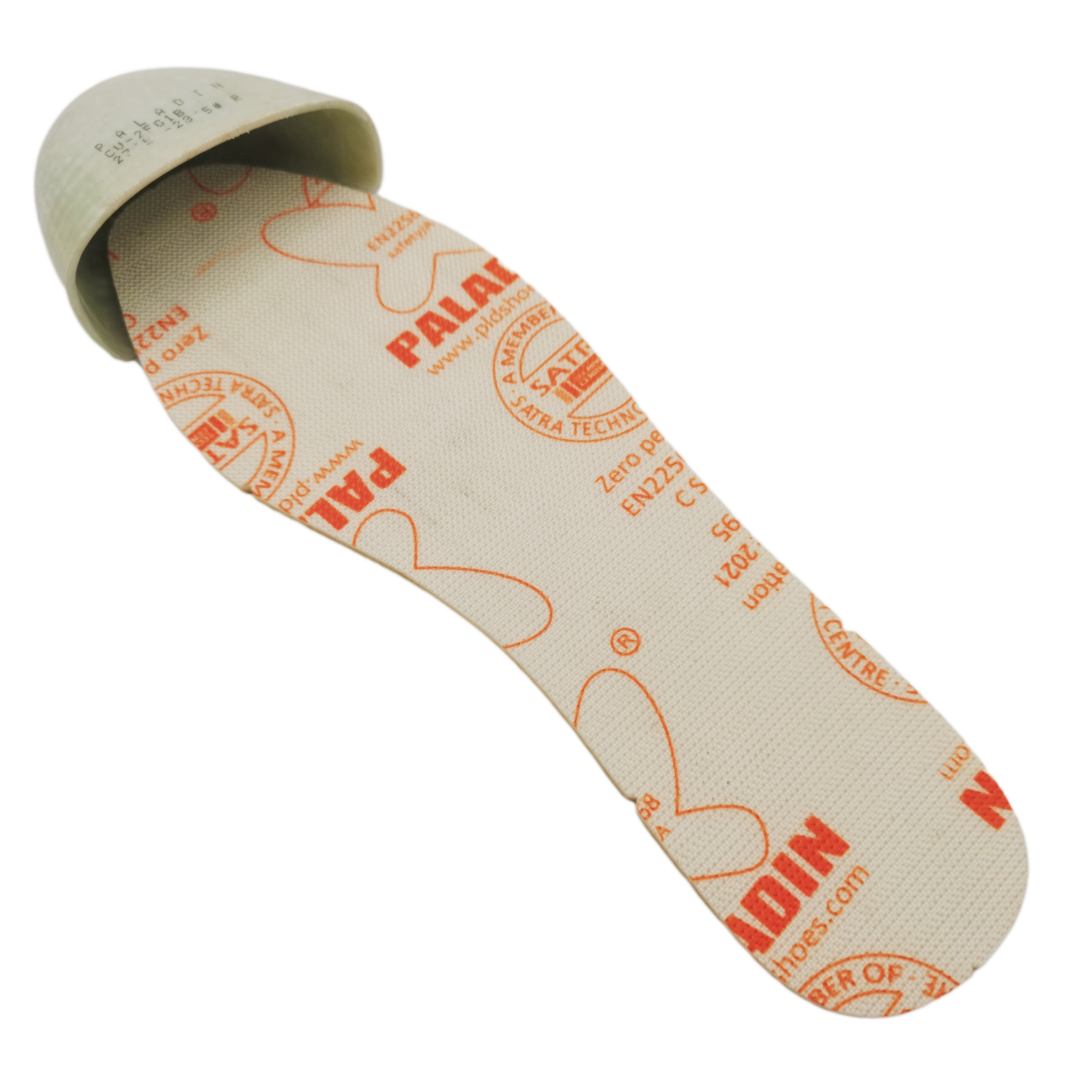
Sharp debris poses a constant threat on construction sites and scrap yards. ASTM tests for puncture resistance using a specialized pin pressed through the sole. Boots passing this test receive the "PR" designation. ISO standards test similarly but denote the protection using the letter "P". The integration of advanced safety midsoles plays a crucial role here. Older steel plates limited foot mobility. Today, specifying a flexible puncture resistant insole dramatically improves ergonomics. Woven Kevlar or specialized composite fabrics stop nails from penetrating while allowing natural foot flexion. This flexibility directly reduces worker fatigue during long shifts.
Standard toe caps only cover the front digits. Environments involving heavy rolling barrels, cinder blocks, or large metal pipes require extended top-of-foot armor. You must assess the need for a metatarsal guard. ASTM labels this protection as "Mt", while ISO uses the letter "M". This guard bridges the gap between the toe box and the ankle. Modern internal metatarsal guards utilize impact-absorbing polymers. These materials remain soft during normal walking but harden instantly upon impact, offering excellent protection without the bulk of external turtle-shell guards.
Electrical safety causes significant confusion among buyers. You must distinguish between insulating against shocks and dissipating static. ASTM's Electrical Hazard (EH) rating designates boots designed to insulate the wearer. These boots stop electrical currents from passing through the body to the ground, protecting against live wire electrocution. Conversely, Anti-Static (SD or ESD) ratings do the exact opposite. They deliberately dissipate static electricity into the ground to prevent sparks. Specifying EH boots in a highly flammable chemical plant can cause an explosion. Specifying ESD boots for high-voltage electricians can lead to lethal shocks. Hazard mapping here is non-negotiable.
Specifying the highest possible protection level seems logical on paper. In practice, heavily armored boots introduce significant physical burdens. Procurement must weigh the actual hazard probability against daily ergonomics. We call this the weight-to-fatigue ratio.
Every extra ounce on a worker's foot multiplies exponentially over a ten-hour shift. If you mandate an S3-rated boot featuring water resistance, external metatarsal guards, and heavy rubber outsoles for a warehouse picker, you invite ergonomic failure. The worker exerts unnecessary energy. Leg fatigue leads to lower back pain, decreased productivity, and eventual injury. You should only specify heavy armor when the hazard assessment explicitly demands it.
Environmental factors dictate outsole requirements. ISO uses strict slip resistance ratings like SRC (tested on ceramic and steel). ASTM recently updated its slip resistance testing under the F3445 standard. You must match the outsole tread pattern to specific job site conditions. Muddy construction sites require deep, aggressive cleats to eject dirt. Slick indoor manufacturing floors require flat, micro-channel siping to maximize surface contact. A boot perfect for outdoor terrain becomes a severe slip hazard on a wet tile floor.
Adoption risks emerge when compliance requirements result in rigid, uncomfortable footwear. Workers despise heavy boots. They will intentionally bypass PPE protocols if the gear causes pain. They might swap compliant insoles for non-compliant gel pads, compromising electrical resistance. Evidence-based procurement solves this. You should always conduct wearer trials before executing bulk purchasing agreements. Let a small group of employees wear the shortlisted boots for two weeks. Their feedback prevents costly, facility-wide rejections.
A "one size fits all" purchase order rarely succeeds in complex industrial environments. Different departments face entirely different hazard profiles. You must establish an internal PPE matrix. Map out exact hazards by department. Electricians strictly require EH-rated soles. Logistics personnel driving forklifts might only need basic toe protection and high slip resistance. Welders need heat-resistant outsoles and Kevlar stitching. Document these specific profiles to guide your purchasing decisions.
Verifying safety claims requires a "trust but verify" mindset. Manufacturers sometimes misrepresent standard compliance. You must inspect the documentation rigorously.
For ISO Standards: Demand the formal Declaration of Conformity. Verify the CE or UKCA mark on the product label. Check the notified body number printed alongside the mark.
For ASTM Standards: Understand that ASTM does not issue certificates directly. You must request independent, third-party lab test reports from the vendor. Check the dates on these reports to ensure they apply to current production batches.
Global companies benefit immensely from a dual-certification strategy. Shortlisting vendors manufacturing dual-certified (ASTM and ISO) footwear reduces supply chain complexity. It allows you to standardize corporate safety policies across North American and European facilities. While this strategy limits your pool of potential vendors, the administrative simplicity often outweighs the sourcing challenge.
To overhaul your footwear procurement program, follow these structured steps:
Conduct a Comprehensive Hazard Assessment: Walk the facility floor and document specific risks for every distinct job role.
Audit Current PPE Labels: Inspect the boots your workers currently wear. Look for expired standards, missing EH/ESD tags, and worn-out treads.
Draft a Feature Requirement Matrix: Translate the documented hazards into exact ASTM or ISO terminology (e.g., EH, PR, S3).
Initiate Pilot Testing: Source samples from two or three vetted suppliers. Distribute them to key workers for a 14-day trial.
Finalize the Approved Catalog: Lock in vendor contracts based on trial feedback and verified lab reports.
Neither ASTM F2413 nor ISO 20345 is inherently superior to the other. They serve as regional regulatory tools designed to validate critical safety claims. Purchasing decisions must anchor deeply in local compliance laws and accurate hazard mapping. Buying European S3 boots for a Texas-based manufacturing plant creates unnecessary legal exposure, just as buying ASTM boots for a German facility violates EU mandates.
Relying on assumptions about generic "safety boots" represents a massive liability. By understanding the specific test ratings—from the impact resistance of the toe box to the electrical conductivity of the sole—buyers can confidently source the correct products. Informed procurement protects the worker from catastrophic injury and protects the bottom line from regulatory fines.
Review your facility's hazard assessment today. Audit your current catalog. Ensure your footwear specifications strictly align with the required ASTM or ISO standards to maintain a safe, compliant workplace.
A: Yes. Many global manufacturers design footwear to pass both testing methodologies. The boot will feature a label displaying both the ASTM specific codes and the ISO "S" rating.
A: Technically, OSHA requires PPE that meets ASTM standards or is demonstrated to be equally or more protective. To avoid legal ambiguity and burden of proof during an inspection, US-based buyers should strictly require ASTM F2413 labeling.
A: No. Both standards are performance-based, meaning composite, alloy, or steel toe caps are acceptable as long as they pass the required impact and compression tests.
A: Under ASTM, look for the letters "PR" on the interior label. Under ISO 20345, puncture resistance is denoted by the letter "P", or it is automatically included if the boot has an S3 or S1P rating.